Persistent diarrhoea, blood in the stool, abdominal pain and exhaustion deserve more than repeated self-treatment when they keep returning or disrupt sleep. You will learn how symptom patterns point toward IBD, how Crohn’s disease differs from ulcerative colitis, when symptoms require a gastroenterologist, and when urgent care is safer than waiting for an appointment.
Key takeaways
- Persistent diarrhoea, blood in stool, weight loss and fatigue need medical assessment.
- Crohn’s disease can affect any digestive-tract section; ulcerative colitis affects the colon and rectum.
- IBS does not cause intestinal inflammation, bleeding or unintentional weight loss.
- Seek emergency care for heavy bleeding, severe pain, dehydration or a swollen abdomen.
Which symptoms and patterns suggest inflammatory bowel disease?
Inflammatory bowel disease symptoms often come in flares: bowel symptoms intensify for days or weeks, then ease. Persistent diarrhoea, blood or mucus in stool, abdominal pain and cramping, urgency, fatigue, reduced appetite and unintentional weight loss are common clues. Feeling better between episodes does not rule out IBD.
Arrange medical assessment if you notice any of these patterns:
- Diarrhoea lasting longer than four weeks or repeatedly returning
- Diarrhoea that wakes you from sleep
- Blood mixed into stool, recurrent rectal bleeding, or bloody diarrhoea
- Ongoing abdominal pain with altered bowel habits
- Unexplained weight loss, fever, marked fatigue or reduced appetite
- Iron-deficiency anaemia or raised inflammatory markers on testing
- A first-degree relative with Crohn’s disease or ulcerative colitis
| Pattern | Why it matters | What to do |
|---|---|---|
| Visible blood with diarrhoea or pain | IBD, infection, polyps and colorectal cancer can all cause this; haemorrhoids are not the only explanation | Arrange prompt assessment |
| Night-time diarrhoea | Inflammation is more concerning than a purely functional bowel pattern | Arrange medical assessment |
| Weight loss or anaemia | Ongoing intestinal inflammation or blood loss may be present | Request clinical evaluation |
| Pain and diarrhoea without bleeding | IBD remains possible, but IBS and other conditions can look similar | Seek assessment if persistent or recurrent |
These findings do not prove IBD. A clinician usually combines your history and examination with blood tests, stool tests and, when indicated, ileocolonoscopy with biopsies.
How do Crohn’s disease and ulcerative colitis differ?
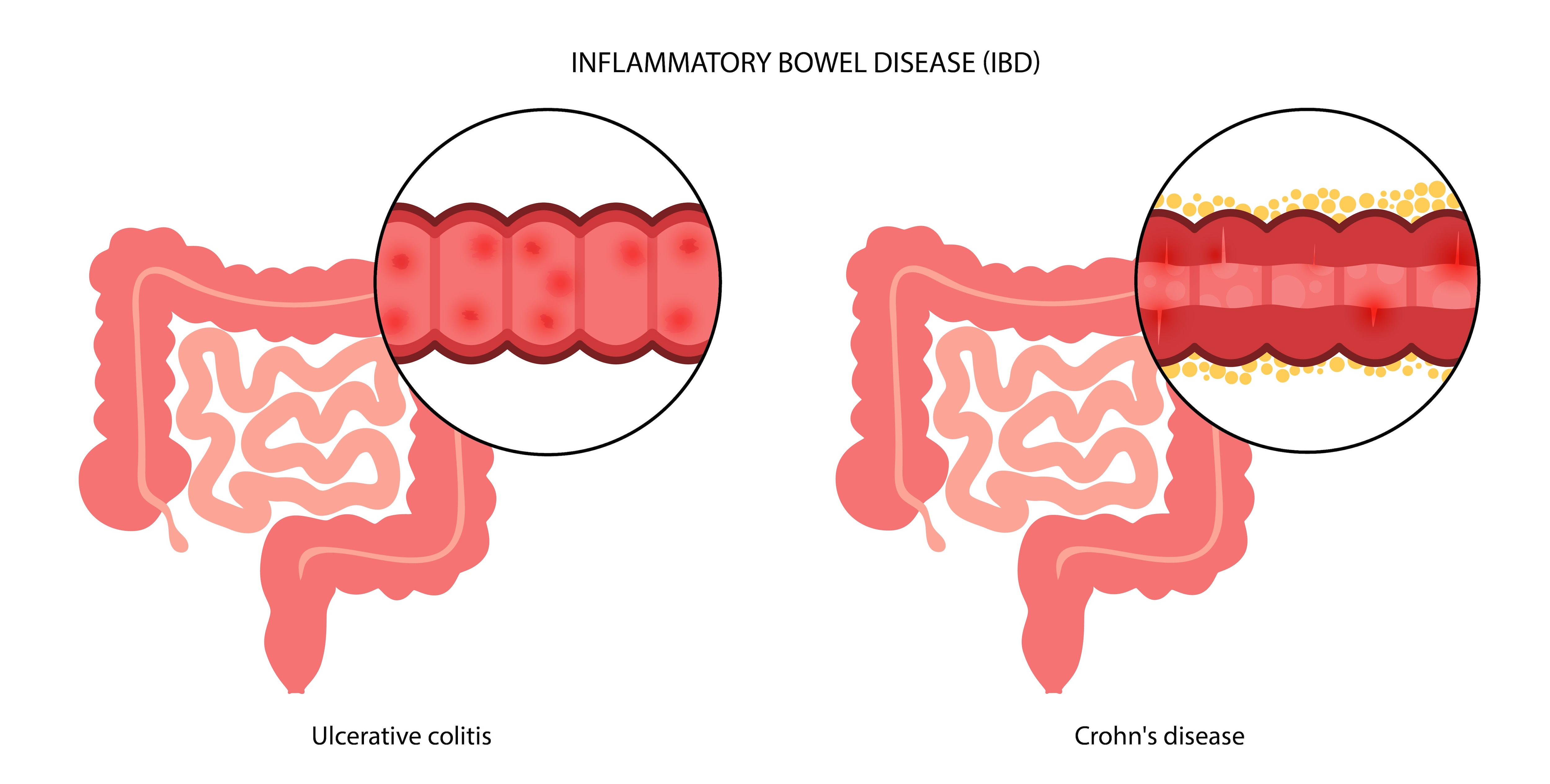
The main distinction is where inflammation occurs and whether it is continuous. Crohn’s disease can affect any part of the digestive tract, from mouth to anus, while ulcerative colitis affects the colon and begins in the rectum.
| Condition | Distribution | Typical pattern |
|---|---|---|
| Crohn’s disease | Any part of the gastrointestinal tract | Patchy “skip” areas; inflammation can involve the full bowel wall, causing strictures, fistulas or abscesses |
| Ulcerative colitis | Rectum and colon only | Continuous inflammation extending upward from the rectum; ulcers and bleeding arise from the inner lining |
Both conditions can cause persistent diarrhoea, abdominal pain, weight loss, fatigue and reduced appetite. Blood, nocturnal bowel movements, urgency and tenesmus (the repeated urge to pass stool despite an empty rectum) favour active colonic inflammation, especially with ulcerative colitis.
Symptoms outside the gut can strengthen suspicion of IBD. These include painful swollen joints, red painful eyes or light sensitivity, mouth ulcers, tender red lumps on the shins called erythema nodosum, and less commonly deep skin ulcers or liver and bile-duct disease.
A normal-looking colonoscopy does not always exclude IBD. Crohn’s disease can affect the small bowel or appear in scattered areas, and biopsies from several colon segments can detect microscopic inflammation. Small-bowel imaging may be needed when symptoms persist.
How is IBD different from IBS, infection and food-related problems?
Pain and diarrhoea do not identify the cause. The useful comparison is the pattern, duration, accompanying signs and test results—not one symptom in isolation.
| Condition | Pattern that may fit | What separates it or needs checking |
|---|---|---|
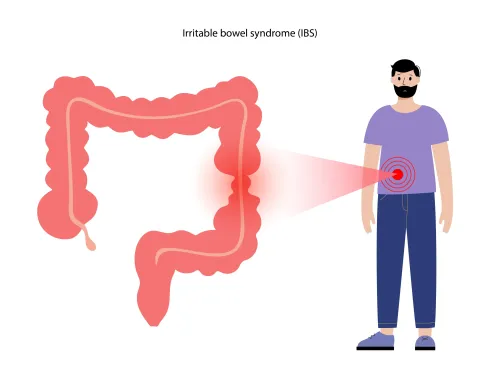
| IBD vs IBS | IBD can cause persistent diarrhoea, urgency, blood, weight loss, fever or night-time stools; IBS causes pain and altered bowel habits. | IBS does not cause intestinal inflammation, ulcers or structural damage. Stool calprotectin, blood tests, and sometimes ileocolonoscopy with biopsies help investigate. |
| Infectious diarrhoea | Sudden diarrhoea, vomiting, fever, cramps or exposure to unsafe food or an infected person. | Stool testing can identify infection. Persistent, bloody or recurrent symptoms need assessment rather than repeated self-treatment. |
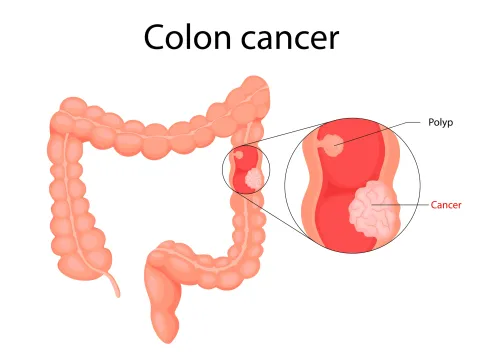
| Haemorrhoids and rectal bleeding | Bright-red blood on toilet paper or outside the stool can come from haemorrhoids. | Blood mixed with stool, bloody diarrhoea, recurrent bleeding, pain, fever, weight loss or anaemia needs medical evaluation because IBD, polyps and cancer can also bleed. |
| Coeliac disease and food intolerance | Coeliac disease can cause prolonged diarrhoea, bloating, weight loss or iron-deficiency anaemia; food intolerance often produces repeatable symptoms after a specific food. | Coeliac blood tests must be interpreted while you are eating gluten. Food intolerance does not explain visible blood, fever or raised intestinal inflammation. |
Improvement between episodes does not exclude IBD. A gastroenterologist can combine your history with blood and stool tests before deciding whether endoscopy or small-bowel imaging is needed.
When should you see a gastroenterologist, and when is it an emergency?
Use these thresholds for when to see a gastroenterologist: diarrhoea lasting more than four weeks, recurrent bloody diarrhoea, persistent abdominal pain with changed bowel habits, or bowel movements that wake you at night. Arrange an assessment even if symptoms improve between episodes.
Arrange prompt evaluation for unexplained weight loss, iron-deficiency anaemia, fever, fatigue, or raised CRP, ESR or faecal calprotectin. Blood mixed through stool or recurrent rectal bleeding needs medical assessment; do not assume haemorrhoids are the cause.
| Route | Warning signs | What to do |
|---|---|---|
| Prompt appointment | Persistent symptoms, recurrent blood, weight loss, anaemia, night-time diarrhoea, or abnormal inflammatory tests | Contact primary care or a gastroenterologist |
| Emergency assessment | Severe dehydration, inability to keep fluids down, severe or rapidly worsening pain, a swollen or rigid abdomen, fainting, confusion, high fever, heavy bleeding, black tarry stool, or very frequent bloody stools | Go to an emergency department now |
Six or more bloody stools in 24 hours plus fever, a fast pulse, anaemia or raised inflammatory markers can indicate acute severe ulcerative colitis. That is a hospital-level problem, not a routine outpatient flare.
Emergency care is also necessary if you cannot pass stool or gas with increasing abdominal swelling, because obstruction, toxic megacolon or perforation requires urgent treatment.
What should you take to your first gastroenterology appointment?
Bring a clear symptom timeline and every relevant result; this can shorten the route to an IBD diagnosis. Note when diarrhoea, bleeding, pain, urgency, night-time bowel movements, fever, weight change or fatigue began, how often they occur, and whether symptoms improve between episodes.
1. List all medicines, supplements and recent antibiotics, including repeated steroid courses, anti-inflammatory painkillers such as ibuprofen, and treatments that changed your bowel pattern.
2. Take reports or photographs of previous blood tests, including full blood count, iron studies, inflammatory markers and liver tests. Include results showing anaemia or raised inflammation.
3. Bring stool results, especially faecal calprotectin and stool tests for infection. Calprotectin indicates intestinal inflammation but does not identify IBD by itself, while infection can produce similar symptoms.
4. Write down previous diagnoses, abdominal operations, hospital visits, family history of IBD or bowel cancer, smoking history and any weight loss. Record what you eat only if a clear food pattern exists; do not assume food intolerance explains bleeding or persistent diarrhoea.
5. Ask which test comes next and why. Depending on your history and examination, the gastroenterologist may recommend repeat blood or stool testing, ileocolonoscopy with biopsies, or small-bowel imaging such as MRI enterography.
Dr. Harshad Joshi can use the symptom pattern, examination and existing reports to decide whether endoscopy, imaging or another explanation deserves priority. No single test proves IBD, so specialist review prevents both unnecessary procedures and prolonged self-treatment for presumed IBS.
Related services
Ultrasound ₹2500 It is a specific type of abdominal ultrasound that focuses on imaging and assessing the small intestine. View service → |
Endoscopy Colonoscopy ₹12000 • Used for examination of the inner lining of the LARGE INTESTINES (COLON) • BOWEL PREPARATION: dietary restrictions and bowel cleansing is done to... |
Frequently asked questions
Which symptoms and patterns suggest inflammatory bowel disease?
Persistent or recurring diarrhoea, blood or mucus in stool, abdominal cramping, urgency, fatigue, reduced appetite and unintentional weight loss suggest IBD. Symptoms can intensify during flares and ease between episodes without ruling out the condition.
How do Crohn’s disease and ulcerative colitis differ?
Crohn’s disease can affect any part of the digestive tract and may involve patchy areas. Ulcerative colitis affects the colon and rectum, causing continuous inflammation that starts in the rectum.
How is IBD different from IBS, infection and food-related problems?
IBD causes inflammation and can lead to bleeding, anaemia, weight loss and abnormal test results. IBS does not damage the intestine. Infections often begin suddenly with fever or exposure-related illness, while food-related symptoms usually follow a specific trigger and improve after it is removed.
When should you see a gastroenterologist, and when is it an emergency?
Arrange a gastroenterology appointment for recurring diarrhoea, blood or mucus in stool, ongoing abdominal pain, unexplained weight loss or persistent fatigue. Seek emergency care for heavy bleeding, severe or worsening pain, fainting, severe dehydration, repeated vomiting or a swollen abdomen.
What should you take to your first gastroenterology appointment?
Bring a symptom timeline, stool frequency and appearance notes, a list of medicines and supplements, family medical history, previous test reports, hospital records and details of food or infection triggers.
Related services
Endoscopy Enteroscopy ₹70000 Enteroscopy is a medical procedure used to visualize and examine the small intestine, which is located between the stomach and the large intestine... |
Endoscopy ₹25000 Patient Information: Endoscopic Ultrasound (EUS) What is Endoscopic Ultrasound (EUS)? Endoscopic Ultrasound (EUS) is a minimally invasive procedure... View service → |