Loose or watery stools that continue for four weeks deserve more than repeated self-treatment, even when symptoms come and go. You will be able to distinguish a short-lived illness from a problem that needs specialist review, recognise urgent warning signs, and prepare useful information for your appointment.
Key takeaways
- Diarrhoea lasting four weeks meets the chronic diarrhoea definition.
- Seek urgent care for blood, black stools, severe pain, fever, or dehydration.
- Bring a symptom diary, medication list, and recent test results.
- Normal first tests do not always explain persistent diarrhoea.
When does diarrhoea become chronic?
Four weeks is the usual threshold: the chronic diarrhoea definition is loose or watery stools occurring for at least four weeks. It does not need to happen every day; symptoms that improve for a few days and then return still count as diarrhoea lasting four weeks.
A short-lived infection usually settles sooner, but ongoing or recurrent symptoms deserve a different plan.
Book a gastroenterology appointment when:
- Loose or watery stools have continued for four weeks, even without pain or weight loss.
- Symptoms keep returning after an apparent recovery, or an initial self-care plan has failed.
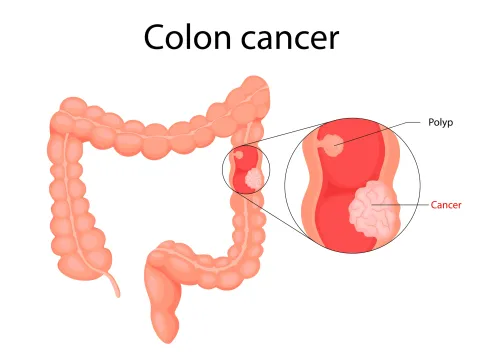
- Diarrhoea wakes you at night, began after age 50, or comes with weight loss, fever, anaemia, blood, or a family history of inflammatory bowel disease or colorectal cancer.
- You have frequent watery stools without blood, particularly after starting ibuprofen or an SSRI. These medicines can be linked with microscopic colitis, a treatable condition; do not stop a prescribed medicine without medical advice.
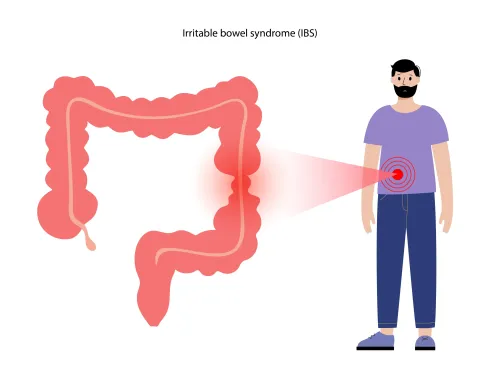
Do not wait for a routine appointment if severe dehydration or severe abdominal pain develops. Seek urgent assessment instead. A gastroenterologist can review the symptom timeline, medicines and need for targeted tests rather than assuming the problem is irritable bowel syndrome.
Which symptoms mean you need urgent care?
Do not wait for a routine appointment if diarrhoea comes with signs of collapse, major fluid loss, or an acute abdominal problem. Emergency assessment is needed when you cannot keep fluids down, become confused or faint, pass very little urine, or feel rapidly worse.
| Level | What to do | Warning signs |
|---|---|---|
| Emergency assessment | Go to an emergency department now | Blood in stool, unexplained black stool, severe abdominal pain, persistent vomiting, confusion, fainting, severe dehydration, very little urine, or high fever |
| Prompt gastroenterology review | Arrange medical assessment soon | Unintentional weight loss, anaemia, nocturnal diarrhoea, ongoing fever, a palpable abdominal or rectal mass, onset after age 50, or a family history of inflammatory bowel disease or colorectal cancer |
| Routine specialist appointment | Book a consultation rather than continuing self-treatment | Diarrhoea lasting at least four weeks, recurring symptoms, or failure of an appropriate first-line plan without emergency signs |
Greasy or difficult-to-flush stools, excessive gas, weight loss, or iron, vitamin B12, or fat-soluble vitamin deficiencies point towards malabsorption or pancreatic exocrine insufficiency. Ask about targeted testing, such as faecal elastase, instead of repeatedly taking anti-diarrhoeal medicine.
Normal initial tests do not automatically prove irritable bowel syndrome. A gastroenterologist should reassess persistent, atypical, or worsening symptoms, including watery diarrhoea linked to medicines such as ibuprofen or proton-pump inhibitors; do not stop prescribed medicines without advice.
What will a gastroenterologist investigate?
A gastroenterologist investigates chronic diarrhoea by testing for inflammation, malabsorption, infection, medication effects and bile-acid diarrhoea rather than assuming irritable bowel syndrome. The first-line work-up commonly includes:
- Full blood count, ferritin or iron studies, electrolytes, renal function, liver tests and inflammatory markers
- Coeliac serology, including total immunoglobulin A
- Faecal calprotectin or faecal lactoferrin to screen for intestinal inflammation
- Giardia testing, especially after untreated water, travel, childcare or household exposure
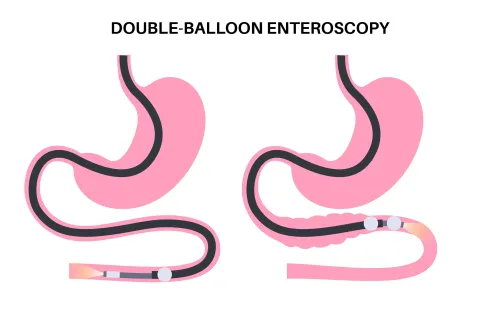
Coeliac disease can cause diarrhoea, weight loss and nutrient deficiencies. Keep eating gluten until testing is complete; starting a gluten-free diet first can produce falsely reassuring blood results. If suspicion remains, upper endoscopy with duodenal biopsies may be needed.
Faecal calprotectin helps assess inflammatory bowel disease, but a normal result does not exclude microscopic colitis or bile-acid diarrhoea. Colonoscopy with biopsies can detect microscopic colitis even when the bowel lining looks normal.
Bile-acid diarrhoea is worth investigating after ileal disease or surgery, gallbladder removal, or a previous label of diarrhoea-predominant irritable bowel syndrome. Where available, SeHCAT or serum 7α-hydroxy-4-cholesten-3-one testing is more informative than assuming the symptoms are functional.
Broad ova-and-parasite testing is not routine without travel or exposure risk. Persistent symptoms, malabsorption, atypical features or failure of an initial plan justify revisiting the diagnosis even when basic blood tests are normal.
How should you prepare for the consultation?
Bring a two-week symptom diary, even if your appointment is sooner. Record stool frequency, the time of each bowel movement, urgency, accidents, night-time episodes, abdominal pain, fever, weight change, blood, and foods or drinks that appear to trigger symptoms. Use the Bristol Stool Form Scale to describe consistency rather than writing only “loose.”
- Write down every medicine, supplement and laxative, including dose and start date. Include metformin, magnesium antacids, antibiotics, non-steroidal anti-inflammatory drugs such as ibuprofen, proton-pump inhibitors such as omeprazole, selective serotonin-reuptake inhibitors, herbal products and sugar-free sweeteners containing sorbitol.
- Bring the medicine strips or bottles, recent blood and stool-test reports, scan or endoscopy reports, referral paperwork, and a record of previous bowel surgery, ileal disease or gallbladder removal.
- Note family history of inflammatory bowel disease or colorectal cancer, recent travel, antibiotic use, and whether diarrhoea wakes you from sleep.
- List your questions, including whether you need coeliac testing, bile-acid diarrhoea testing, or colonoscopy biopsies.
Do not stop a prescribed medicine before discussing it with the prescriber. Dr. Harshad Joshi can use your timeline and medication list to judge whether watery diarrhoea warrants colon biopsies for microscopic colitis, even when the bowel lining looks normal.
Related services
Endoscopy Colonoscopy ₹12000 • Used for examination of the inner lining of the LARGE INTESTINES (COLON) • BOWEL PREPARATION: dietary restrictions and bowel cleansing is done to... |
Endoscopy ₹50000 Capsule endoscopy is a non-invasive medical procedure that involves swallowing a small, pill-sized capsule equipped with a camera and light source. View service → |
Why can normal initial tests still require follow-up?
A normal faecal calprotectin makes active inflammatory bowel disease less likely, but it does not explain every cause of persistent diarrhoea. Microscopic colitis and bile-acid diarrhoea can occur with little or no rise in inflammatory markers.
Normal blood results also narrow the possibilities rather than close the investigation. They do not reliably exclude coeliac disease, microscopic colitis, bile-acid diarrhoea or early inflammatory bowel disease.
Targeted follow-up testing may include:
- Colonoscopy with biopsies from the right and left colon when diarrhoea is chronic and watery. Microscopic colitis can leave the bowel lining looking completely normal, so visual inspection alone is not enough.
- Coeliac testing and, when suspicion remains, upper endoscopy with duodenal biopsies. This matters if you have eaten little gluten, have IgA deficiency or show signs of malabsorption.
- Faecal elastase when stools are greasy or difficult to flush, gas is excessive, weight is falling, or iron, vitamin B12 or fat-soluble vitamin levels are low. These features raise concern for pancreatic insufficiency.
- Giardia testing when exposure, travel or persistent watery diarrhoea makes it relevant.
Do not start a gluten-free diet before coeliac testing unless your clinician advises it; removing gluten can make blood tests and biopsies falsely reassuring. Persistent symptoms deserve review even after an apparently normal first panel.
Frequently asked questions
When does diarrhoea become chronic?
Diarrhoea is considered chronic when loose or watery stools continue for at least four weeks, even if symptoms pause for a few days and return.
Which symptoms mean you need urgent care?
Seek urgent medical care for blood or black stools, severe abdominal pain, high fever, fainting, confusion, or signs of dehydration such as very little urine.
What will a gastroenterologist investigate?
A gastroenterologist will review your stool pattern, diet, medications, medical history, and warning symptoms, then select tests such as blood tests, stool tests, imaging, or endoscopy when needed.
How should you prepare for the consultation?
Record stool frequency and appearance, symptoms and triggers, recent travel, diet changes, medication use, weight changes, and bring previous test reports.
Why can normal initial tests still require follow-up?
Initial tests may exclude common causes without identifying the reason for ongoing symptoms. Persistent diarrhoea requires follow-up to reassess symptoms and consider further testing.
Related service
Ultrasound ₹2500 It is a specific type of abdominal ultrasound that focuses on imaging and assessing the small intestine. View service → |