The small intestine can be difficult to investigate. Standard upper endoscopy examines the oesophagus, stomach and the beginning of the small intestine, while colonoscopy examines the colon and can usually assess only the very end of the small bowel.
When a suspected problem lies deeper within the small intestine, Double Balloon Enteroscopy may provide access that conventional endoscopy cannot.
What is double balloon enteroscopy?
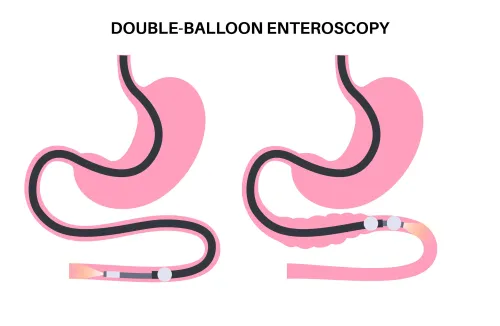
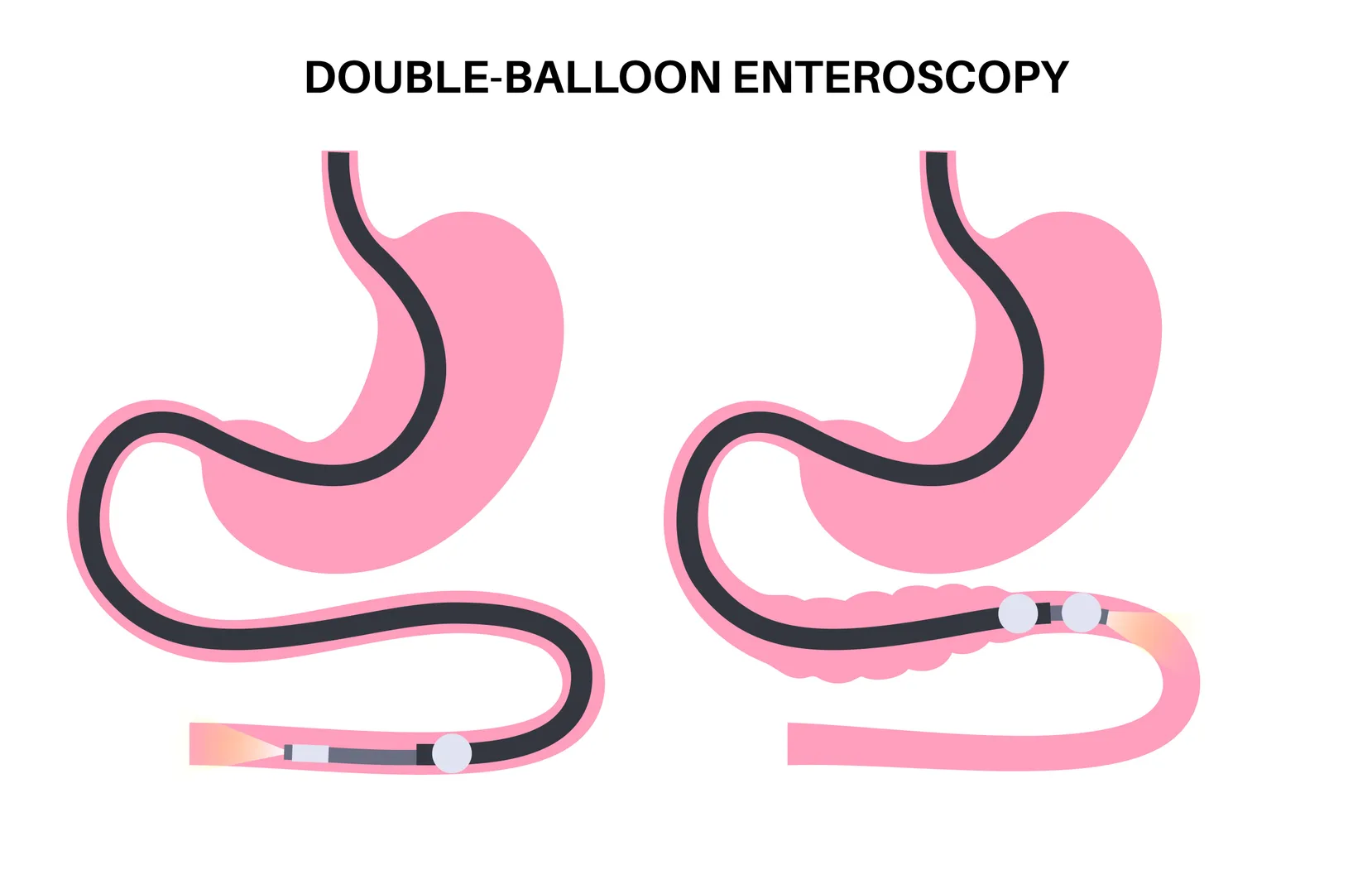
Double balloon enteroscopy, or DBE, is an advanced endoscopic technique designed to examine deeper portions of the small intestine.
The system uses an endoscope and an overtube equipped with balloons. By alternately inflating and deflating the balloons, the intestine can be carefully pleated over the instrument, allowing the endoscope to progress further through the small bowel.
The procedure may be performed through the mouth or from the lower gastrointestinal route depending on where the suspected abnormality is located.
Why might someone need DBE?
Double balloon enteroscopy is not generally the first investigation for ordinary abdominal discomfort.
It may be considered after previous tests indicate or strongly suggest a small bowel abnormality requiring closer examination or treatment.
Clinical situations can include
- Suspected small bowel bleeding
- Certain small bowel lesions or tumours
- Polyps within the small intestine
- Abnormalities identified on capsule endoscopy or imaging
- Selected cases of small bowel Crohn's disease
- Need for biopsy of a deeper small bowel lesion
- Selected therapeutic procedures within the small intestine
The exact indication should be established before the procedure is planned.
How is it different from capsule endoscopy?
Capsule endoscopy and double balloon enteroscopy can complement each other, but they perform different jobs.
A capsule camera travels naturally through the digestive tract and captures images. It can provide valuable visual information about areas of the small intestine that are difficult to reach with conventional scopes.
However, a capsule cannot take a biopsy or directly treat a bleeding lesion.
DBE allows the endoscopist to inspect the area directly and, in suitable situations, collect tissue samples or perform therapeutic interventions.
This is one reason capsule findings may sometimes lead to a recommendation for enteroscopy.
What should happen before the procedure?
Readiness begins with confirming that DBE is likely to answer a clinically important question.
Patients should discuss previous endoscopy, colonoscopy, capsule studies and imaging with their gastroenterologist. Current medications, allergies and major medical conditions also need review.
Preparation varies according to the route of the procedure and individual clinical circumstances.
Patients taking blood-thinning medicines should not make changes independently. Medication decisions should be discussed with the treating medical team.
Is double balloon enteroscopy suitable for everyone?
No.
Because it is an advanced procedure, the expected diagnostic or therapeutic benefit should justify its use. Alternative investigations may be more appropriate depending on the suspected condition.
Potential procedure-related risks also need to be discussed during informed consent.
Choosing the next investigation in Mumbai
Patients sometimes arrive at a gastroenterology consultation with persistent symptoms and several normal reports. The next step should not automatically be the most advanced test available.
Instead, the sequence of investigations should be guided by the likely location and nature of the problem.
Dr. Harshad Joshi can assess patients in Mumbai with complex gastrointestinal and small bowel concerns and determine whether advanced evaluation, including double balloon enteroscopy where appropriate, forms part of the required diagnostic pathway.
For patients across Mumbai and Maharashtra, the most useful question is not simply, Can this test see more? It is, Will seeing deeper into the small intestine change the diagnosis or treatment?
When the answer is yes, double balloon enteroscopy can provide both diagnostic access and, in selected cases, an opportunity for treatment within a part of the digestive tract that is otherwise challenging to reach.
Keywords