Inflammatory bowel disease is a group of immune-mediated conditions that can injure the digestive tract, alter bowel movements and affect organs beyond the gut. By the end, you will be able to distinguish Crohn’s disease from ulcerative colitis, recognise patterns that suggest active disease or complications, and understand how clinicians confirm and manage IBD.
Key takeaways
- Crohn’s disease can affect any part of the digestive tract; ulcerative colitis affects the colon and rectum.
- Active IBD can cause persistent diarrhoea, rectal bleeding, abdominal pain, fatigue and weight loss.
- Seek urgent care for severe pain, heavy bleeding, dehydration, fever or a swollen abdomen.
- Doctors use symptoms, blood and stool tests, endoscopy and imaging to confirm IBD and guide treatment.
What IBD is and where it affects the digestive tract
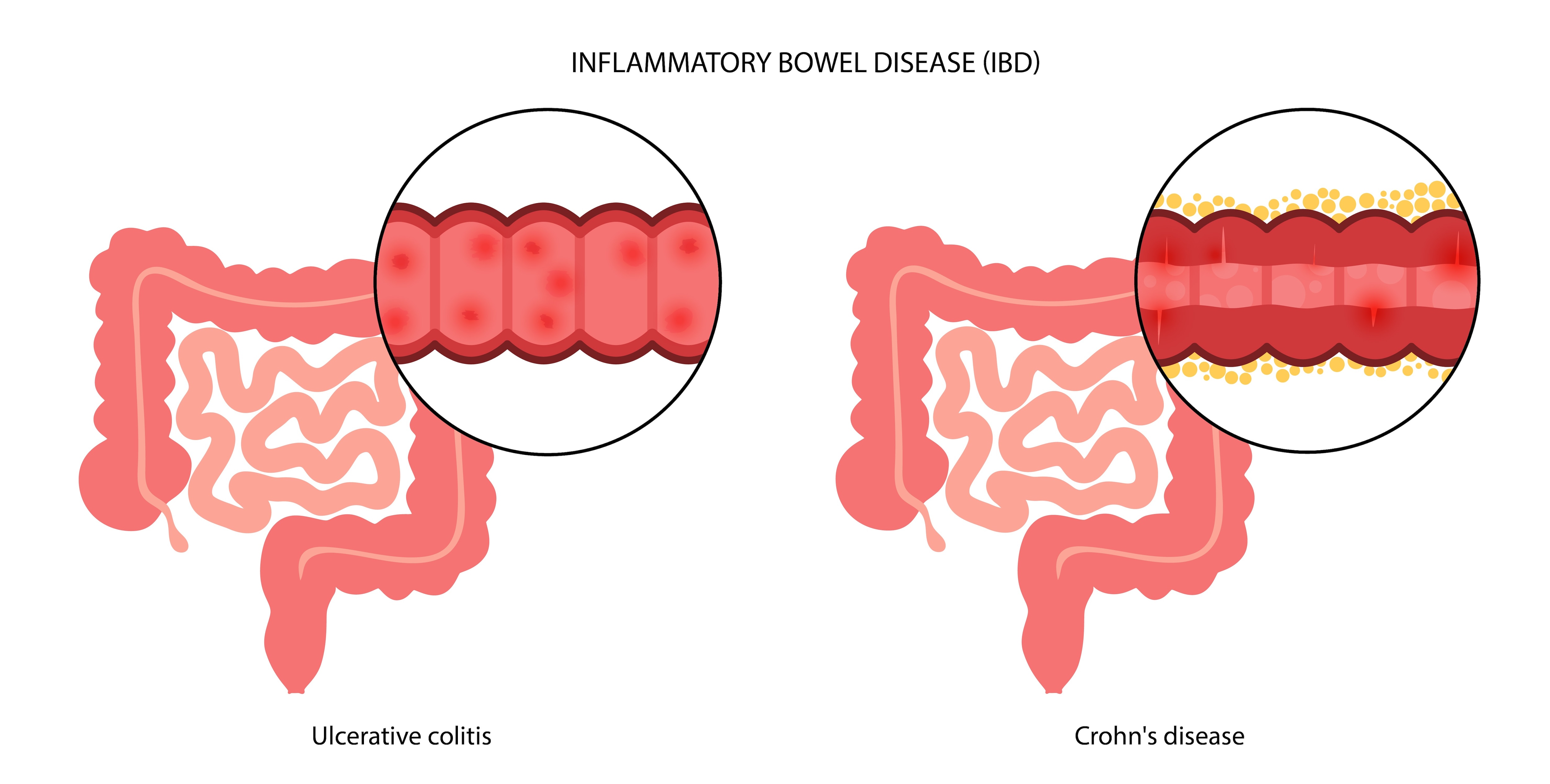
Inflammatory bowel disease is a group of chronic immune-mediated conditions, not one single illness. Its two main forms are Crohn’s disease and ulcerative colitis. Crohn’s disease can affect any part of the digestive tract, from the mouth to the anus, while ulcerative colitis is limited to the colon and rectum.
| Condition | Where it occurs | Pattern of inflammation |
|---|---|---|
| Crohn’s disease | Any part of the digestive tract; the terminal ileum and colon are common sites | Patchy “skip” areas, with normal tissue between affected sections; inflammation can extend through the full bowel wall |
| Ulcerative colitis | Always involves the rectum and extends into the colon | Continuous inflammation that spreads upward from the rectum through the inner mucosal lining |
These differences matter because the same symptom can have different causes and consequences depending on its location. Crohn’s disease in the small intestine can impair absorption and produce narrowing, whereas Crohn’s disease around the anus can cause fistulas. Ulcerative colitis primarily causes inflammation, ulcers and bleeding within the colon.
The boundary is not always obvious from symptoms alone. Abdominal pain, diarrhoea, urgency and fatigue can occur with either condition, so doctors use the distribution seen on colonoscopy and imaging, biopsy findings, and markers of intestinal inflammation to classify IBD.
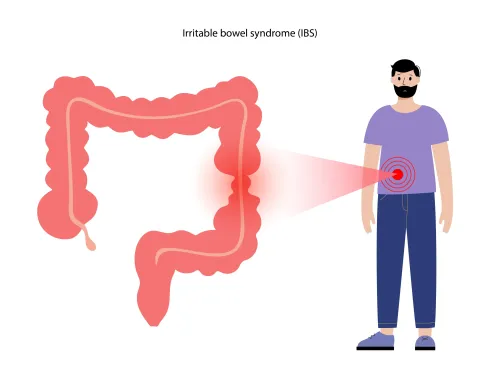
Neither condition is the same as irritable bowel syndrome, which causes symptoms without the characteristic intestinal inflammation and tissue injury of IBD.
How intestinal inflammation changes digestion and symptoms
Inflammation damages the intestinal lining and disrupts its normal jobs: absorbing nutrients, reclaiming water and moving contents forward. It also makes nerves more sensitive, so abdominal pain can occur even before major structural damage develops.
The resulting tissue injury follows several pathways:
- Erosions and ulcers remove the protective surface, exposing small blood vessels and causing rectal bleeding or blood mixed with stool.
- Inflammation extending into deeper bowel layers can create an abscess or a fistula, an abnormal tunnel linking the intestine with skin, another bowel segment or an organ.
- Repeated injury and healing produce scar tissue that narrows the bowel, causing cramping, vomiting, bloating or difficulty passing stool.
- Damage in the small intestine reduces absorption of nutrients, bile acids and vitamin B12, leading to weight loss, fatigue or bulky, greasy stools.
- Inflamed colon tissue moves water through too quickly, producing diarrhoea; an inflamed rectum creates urgency and tenesmus, the persistent feeling that you must pass stool even when little comes out.
Location changes the pattern of IBD symptoms. Disease higher in the digestive tract can cause mouth sores, nausea or upper abdominal discomfort. Small-bowel inflammation more often causes pain, diarrhoea and malabsorption, while colonic inflammation causes frequent loose stools and bleeding.
Symptoms do not measure tissue damage reliably: severe inflammation can be quiet, while pain or diarrhoea can persist after inflammation has settled.
How to recognise active disease, a flare and urgent complications
Diarrhea alone does not prove an IBD flare. Active disease is more likely when diarrhea, urgency, nocturnal stools, weight loss, fatigue, abdominal pain or rectal bleeding persist or worsen together, but symptoms do not reliably measure inflammation. Some people have severe endoscopic inflammation with mild symptoms; others have pain or diarrhea after inflammation has settled.
The IBS versus IBD distinction depends on objective evidence, not symptoms alone. Fecal calprotectin detects neutrophilic intestinal inflammation, but intestinal infection, colorectal cancer, nonsteroidal anti-inflammatory drugs and other conditions can also raise it.
| Cause | Clues | What helps distinguish it |
|---|---|---|
| IBD flare | Persistent diarrhea, urgency, bleeding, weight loss or rising inflammatory markers | Stool infection tests, fecal calprotectin, endoscopy or imaging |
| IBS | Abdominal pain linked to bowel movements, altered habits, no tissue damage | Normal inflammatory evaluation and appropriate clinical assessment |
| Intestinal infection | Sudden onset, fever, exposure, vomiting or watery stools | Stool testing, including C. difficile when relevant |
| Other cause | Symptoms after medication, surgery or dietary change; bile-acid diarrhea or cancer | Medication review, targeted tests, imaging or colonoscopy |
Seek urgent medical care for:
- Heavy rectal bleeding, faintness or a rapid heartbeat
- Severe or rapidly worsening abdominal pain
- Marked abdominal swelling, especially with fever
- Persistent vomiting or inability to keep fluids down
- Dehydration, confusion or very little urine
- Inability to pass stool or gas
These signs can indicate obstruction, abscess, perforation or toxic megacolon rather than an uncomplicated flare.
How doctors confirm IBD and choose a treatment target
No single test proves an IBD diagnosis. CRP and blood tests assess anaemia, infection, inflammation, albumin and organ effects, while stool tests exclude enteric infection, including C. difficile. Fecal calprotectin measures intestinal neutrophilic inflammation, but infection, colorectal neoplasia and NSAIDs can also raise it.
Colonoscopy with biopsies is central when colitis is suspected because tissue changes help distinguish ulcerative colitis, Crohn’s disease and mimics. MR enterography, CT enterography or intestinal ultrasound evaluates small-bowel inflammation, strictures, fistulas and abscesses.
A gastroenterologist such as Dr. Harshad Joshi matches these tests to the suspected location rather than ordering every test for every patient.
Treatment depends on four decisions:
- Where is the disease: colon, ileum, upper digestive tract or several sites?
- How severe is the inflammation, and are there bleeding, obstruction, fistula or abscess complications?
- What treatments have failed, caused side effects or maintained control?
- What objective target will show success: improved calprotectin or CRP, steroid-free remission, and endoscopic healing?
| Disease pattern | Evidence to follow | Treatment direction |
|---|---|---|
| Mild, limited ulcerative colitis | Symptoms, calprotectin and colonoscopy | Local therapy may be sufficient |
| Moderate or extensive inflammation | Biomarkers plus endoscopy and biopsies | Induction therapy, then maintenance |
| Small-bowel or penetrating Crohn’s disease | MR enterography or ultrasound for complications | Escalate medical treatment; drain or operate for abscess, obstruction or fistula |
Feeling better does not prove healing. Doctors reassess symptoms alongside biomarkers, endoscopy and imaging because silent inflammation can still damage bowel.
Related services
Ultrasound ₹2500 It is a specific type of abdominal ultrasound that focuses on imaging and assessing the small intestine. View service → |
Endoscopy Colonoscopy ₹12000 • Used for examination of the inner lining of the LARGE INTESTINES (COLON) • BOWEL PREPARATION: dietary restrictions and bowel cleansing is done to... |
Long-term effects, treatment risks and protection of the digestive tract
Monitoring must extend beyond bowel symptoms. Extra-intestinal manifestations can affect joints, eyes, skin, liver and blood vessels, and some continue when intestinal inflammation is quiet.
- Inflammatory arthritis
- Uveitis or episcleritis
- Erythema nodosum or pyoderma gangrenosum
- Primary sclerosing cholangitis
- Venous or arterial blood clots
Report a painful red eye, swollen joint, tender leg, sudden breathlessness or new jaundice promptly. These problems need separate assessment; treating the bowel alone may not control them.
Systemic corticosteroids can settle a severe flare quickly, but they are induction or rescue treatment, not a maintenance plan. Continuing them exposes you to corticosteroid risks:
- Infection
- Osteoporosis and fractures
- Hypertension and diabetes
- Cataracts
- Adrenal suppression
Steroid dependence should trigger a steroid-sparing IBD treatment plan using an appropriate immunomodulator, biologic or targeted small-molecule therapy.
Crohn’s disease surgery becomes important for a fixed obstructing stricture, abscess, fistula, perforation or disease uncontrolled by medication. Crohn’s disease surgery is not usually curative because inflammation can recur elsewhere. Removing the colon and rectum can eliminate colonic ulcerative colitis, although pouch complications and extra-intestinal manifestations can remain.
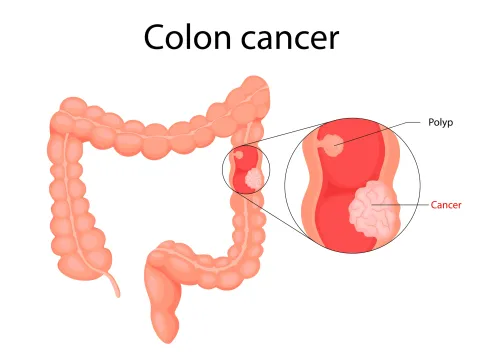
Colorectal-cancer surveillance becomes important for colonic IBD. Surveillance colonoscopy generally starts about eight years after symptom onset, with earlier or more frequent examinations for primary sclerosing cholangitis, extensive disease, heavy inflammation or a family history. This schedule differs from average-risk screening.
Frequently asked questions
What is the difference between Crohn’s disease and ulcerative colitis?
Crohn’s disease can affect any part of the digestive tract from mouth to anus, while ulcerative colitis affects the colon and rectum.
How does intestinal inflammation affect digestion?
Inflammation can impair nutrient and water absorption, speed intestinal transit and cause diarrhoea, abdominal pain, bleeding, fatigue and weight loss.
What symptoms suggest an active IBD flare?
Persistent diarrhoea, rectal bleeding, abdominal pain, urgency, fatigue, fever, reduced appetite and weight loss can indicate active disease.
When are IBD symptoms an urgent medical problem?
Seek urgent care for severe or worsening abdominal pain, heavy bleeding, dehydration, high fever, repeated vomiting or a swollen abdomen.
How do doctors confirm inflammatory bowel disease?
Doctors combine your history and examination with blood tests, stool tests, colonoscopy with biopsies and imaging when needed.
Related services
Endoscopy Enteroscopy ₹70000 Enteroscopy is a medical procedure used to visualize and examine the small intestine, which is located between the stomach and the large intestine... |
Endoscopy ERCP ₹45000 Patient Information: ERCP (Endoscopic Retrograde Cholangiopancreatography) What is ERCP? ERCP (Endoscopic Retrograde Cholangiopancreatography) is a... |